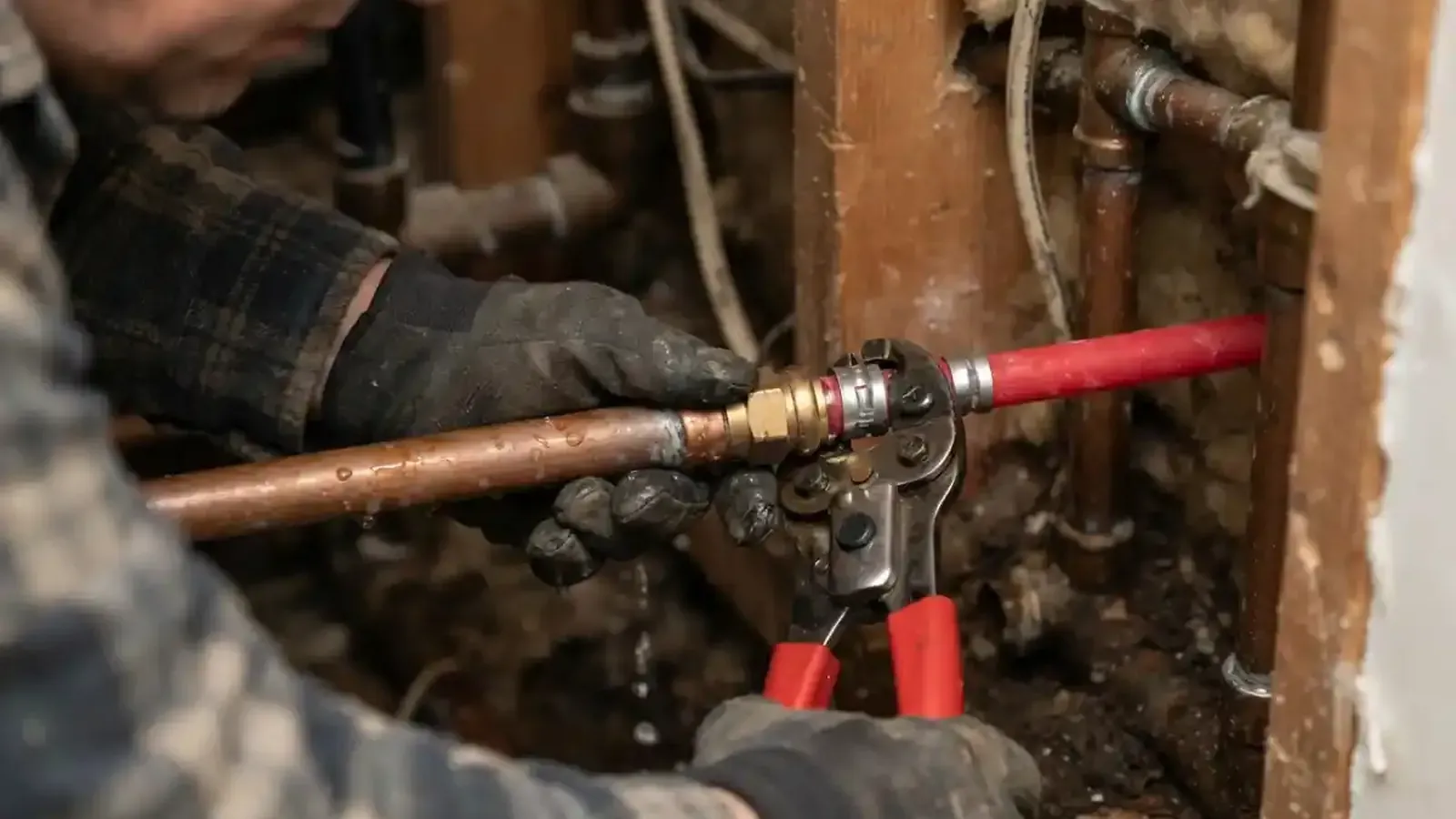
Heat tape, also called heat cable, is an electric cable that wraps along a water pipe and gives off warmth to help keep it from freezing. Used correctly, it protects a pipe in an unheated space such as a crawlspace, garage, or outdoor run. Used wrongly, it can fail, overheat, or start a fire.
The most important rule is simple: read and follow the instructions that come with your specific product. Different cables work differently, and what is safe for one is not safe for another.
What heat tape is, and what it is not
Heat tape warms a pipe so cold air does not freeze the water inside. It is not a heater for a room, and it does not replace insulation. Most products are meant to work together with pipe insulation, which holds the warmth next to the pipe.
It also is not a fix for a pipe that is already frozen, unless the product says it is made for thawing. Many are made only to prevent freezing, and using them to thaw can damage the pipe or the cable.
Types of heat tape
| Type | How it behaves | Things to know |
|---|---|---|
| Constant wattage | Gives off the same heat along its length | Cannot be overlapped, since it can overheat |
| Self-regulating | Adjusts heat based on temperature | Often safer for crossing itself, but follow the label |
| Thermostat controlled | Turns on and off by temperature | Needs a working sensor |
| Plug-in with built-in control | Simple outlet connection | Check the cord and plug for wear |
Check the packaging for the pipe material it is rated for, such as metal or plastic. Some tapes are not approved for plastic pipes, and others require specific insulation. Always match the product to the pipe.
Real risks of misuse
Heat tape problems often come from small mistakes. Overlapping tape that is not rated for it can overheat. A damaged cable can short or spark. A wet connection can trip a breaker or cause a shock hazard.
Old tape is a particular concern. Cable that has been in place for years, is cracked, or has brown or burned spots should be replaced, not reused. Never use damaged heat tape.
Fire and shock hazards
Do not use heat tape that is frayed, cracked, kinked, or scorched. Do not cover tape with materials the maker says to avoid. Do not plug it into an extension cord unless the instructions allow it. If you smell burning or see smoke, unplug it if it is safe to do so and call 911.
Installation checklist
Before you install or reuse heat tape
- Read the whole instruction sheet before opening the package.
- Confirm the tape is rated for your pipe material and location.
- Check the cord, plug, and cable for damage.
- Do not overlap the cable unless the instructions say it is allowed.
- Use the tape and fasteners the maker specifies.
- Cover with the insulation the maker recommends, and keep it dry.
- Plug into a properly protected outlet, and test the outlet first.
- Mark the shutoff and unplug the tape when the season ends if the instructions say so.
Step by step, in general terms
General installation pattern
- Clean and dry the pipe.
- Lay the cable along the pipe in the way the instructions show, usually straight or in a gentle spiral.
- Secure the cable with the tape the maker supplies.
- Place the thermostat sensor on the pipe if the product has one.
- Insulate over the cable using approved insulation.
- Plug in and test according to the instructions.
- Check on it periodically, before and during cold weather.
These steps are general. Your product may differ, and its manual wins over anything in a blog post.
Insulation, drafts, and other steps that help first
Heat tape works best as the last layer of protection, not the first. Seal gaps where cold air blows across a pipe, such as around a crawlspace vent or a wall penetration. Add foam or fiberglass pipe insulation that the tape maker allows, and keep it dry.
An outdoor spigot should be shut off from inside if it has an indoor shutoff, and hoses should be disconnected. These small steps cost little and remove the need for electric help on the most exposed pipe in many houses.
When heat tape is the wrong answer
Heat tape is a way to protect exposed pipes. It does not fix a pipe that runs through a poorly insulated wall or one that has been damaged. If a pipe keeps freezing in the same place, the better fix may be to insulate it, seal air leaks around it, or reroute it into a warm space.
Wiring and power matter too. If you rely on heat tape and the power goes out, the tape stops working. Think about what happens if you are away and the breaker trips.
Helena pipes and cold weather
We do not quote specific Helena temperatures here, since we cannot cite a verified figure. What matters is which pipes in your house sit in unheated areas: crawlspaces, garages, exterior walls, outdoor spigots, and any run near a vent or vent opening.
Helena's growth since 1990 means many homes are newer, but plumbing in an unheated garage or crawlspace is exposed in any house. Walk through yours and make a list of the spots you worry about.
If a pipe freezes or bursts
Shut off the main water valve right away, open a faucet to relieve pressure, and keep away from electrical items near water. Do not use a torch or open flame on a pipe. Call a plumber, and for a burst pipe or active leak, our 24/7 line is open at (855) 575-2890.
Our burst pipe repair page explains what happens on a call. If you can hear water but cannot see it, leak detection can find the source.
We serve Helena and nearby homes in Calera and Alabaster, including after-hours calls.
Heat tape questions in Helena
Only if the product is rated for it. Read the label, since some cable can damage plastic pipe.
Follow the instructions. Some products are made for continuous use and others are not.
Only if the instructions permit it. Overlapping some cables can cause overheating.
Yes if it is cracked, scorched, or damaged, or if you do not know its age or condition.
Shut off the main valve and call. Our 24/7 line is (855) 575-2890.