
If water is spraying, pouring through a ceiling, or pooling near electrical outlets, close the main shutoff valve first. Then call (855) 575-2890, because our emergency line is open 24/7. Keep people and pets away from wet electrical areas, and call 911 if water has reached the panel or you smell gas. Once the water is off, we can start working out where it was coming from.
A hidden leak that cannot wait until morning
Some leaks are slow and can be scheduled. Others are not. Treat these as night and weekend calls:
- Water is coming through a ceiling, light fixture or wall.
- The main shutoff will not fully close and water keeps flowing.
- A floor is warm, soft or lifting and you cannot see the source.
- The meter keeps spinning with every fixture turned off, and you hear water running somewhere.
- Water is rising in a crawlspace, garage or basement.
We take after-hours calls on the same line as daytime calls, and we offer same-day appointments when available. If the leak is slow and nothing is being damaged, shutting the main valve overnight and booking a daytime visit is often the calmer choice. We will tell you which one fits when you call.
How we narrow down where the water is going
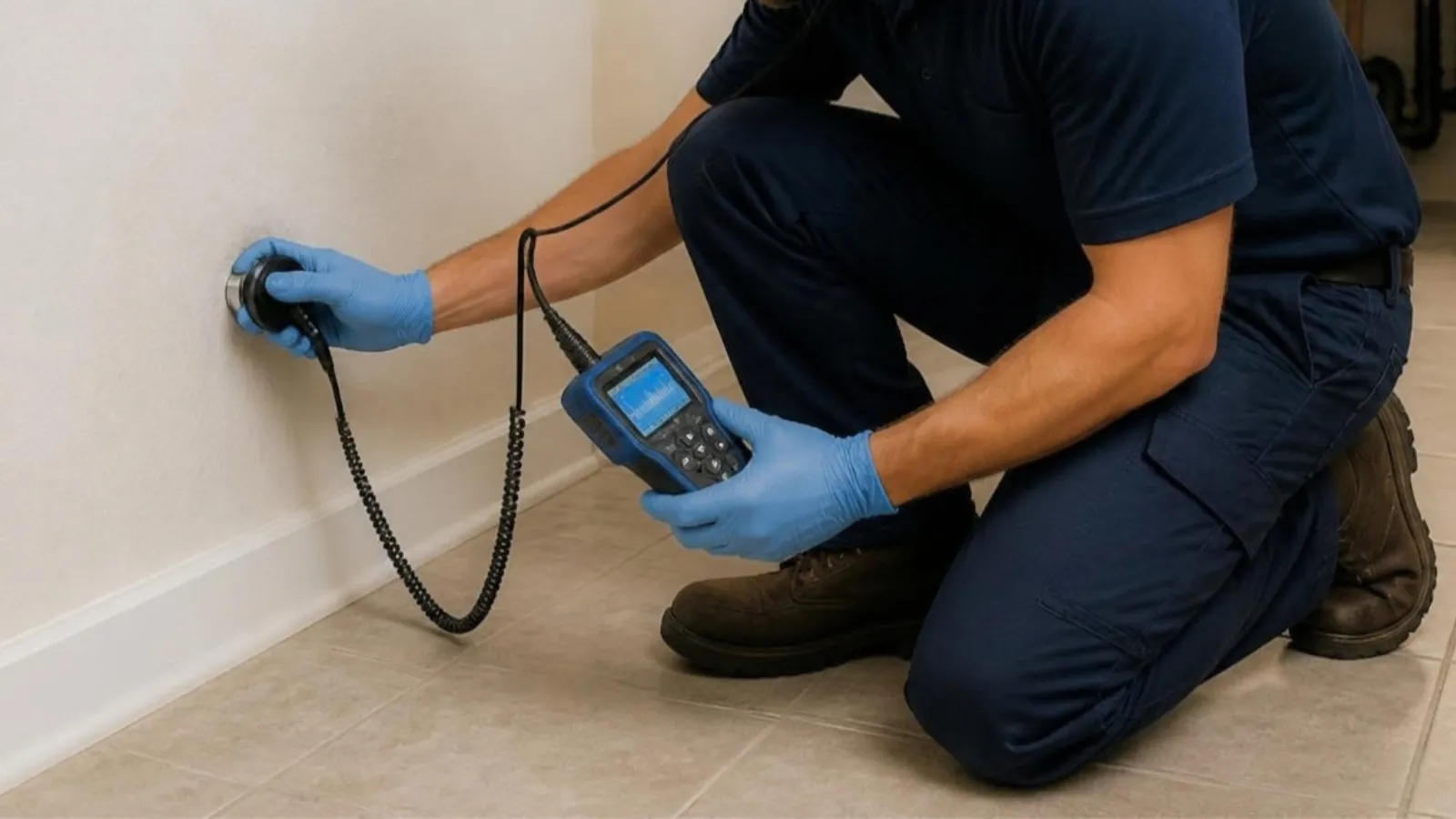
Finding a leak is mostly a process of elimination. We start by shutting off sections of the system and watching what the meter does, because that tells us whether the loss is inside the house, under the slab, or on the line between the meter and the house. Then we use the tool that fits the situation.
Common methods include listening devices that pick up the sound of water escaping a pressurized pipe, pressure testing of isolated sections, thermal imaging to spot warm or wet areas behind finished surfaces, and tracer gas for lines that are hard to hear. No single tool works everywhere. A hiss that carries well through copper may vanish in plastic, and a wet wall may be a supply leak, a drain leak or condensation.
The goal is a marked spot, not a guess. That limits how much drywall, flooring or concrete is opened, which is where most of the cost and mess of a leak repair actually comes from.
| What you notice | Likely source | What to do first |
|---|---|---|
| Meter moves with everything off | Supply line, slab, or yard line | Close the main valve and watch if the meter stops |
| Warm spot on a floor | Hot water line under the slab | Turn down the water heater and call |
| Brown stain growing on a ceiling | Supply or drain above, or roof | Catch drips, avoid the wet area, call |
| Damp baseboard or bubbling paint | Wall supply or drain, or fixture seal | Check nearby fixtures, then call |
| Musty smell in a crawlspace | Drain or supply leak below the floor | Do not crawl in standing water, call |
| Green strip or soggy patch in the yard | Buried supply or irrigation line | Close the irrigation valve and call |
| Pool water level dropping fast | Pool plumbing or the shell | Run a bucket test before calling |
Slab leaks: water under the floor
A slab leak is a leak in a pipe that runs in or beneath a concrete foundation slab. The signs are usually a warm patch of floor, the sound of running water when everything is off, a damp spot on carpet along an edge, or a water bill that climbs with no change in habits. Hot lines are the usual suspects for warm floors, but cold lines under a slab can fail too.
If your home sits on a slab, the response is to shut off the water, confirm the meter stops, and call. Do not cut into flooring yourself. We pinpoint the leak from above first so the repair can be as targeted as possible, then walk through the options with you.
Slab repair choices generally fall into three groups: opening the slab over the break and fixing the pipe, rerouting the line through walls or the attic, or replacing the line altogether. Which one fits depends on the pipe material, how many breaks are likely, and the layout of the house. A single pinhole in an otherwise sound line is a different decision from a line that has started failing in several places.
Water meter and high-bill checks
A bill that jumps is one of the most common reasons people call. The EPA's WaterSense program estimates the average household wastes about 180 gallons per week, or roughly 9,400 gallons per year, from leaks, and the typical American uses about 82 gallons per day at home. If your use is far above that without a reason, a hidden leak is worth ruling out.
Here is a simple check you can do before we arrive:
Meter test you can run at home
- Turn off every faucet, appliance, ice maker and irrigation zone, and make sure nobody flushes a toilet.
- Find your meter and open the lid carefully. Look for the small dial or triangle that spins when any water flows.
- If it moves, note the reading, wait 30 to 60 minutes without using water, and check again.
- Close the main valve at the house. If the meter stops, the leak is inside the house. If it keeps moving, the leak is on the line between the meter and the house.
- Drop a little food coloring into each toilet tank and wait 15 minutes. Color in the bowl means a silent flapper leak.
Toilet flappers are the most common silent loss in a house, and they cost far less to fix than a slab. If the toilets pass the dye test and the meter still moves with the main closed, the problem is in the buried line. Our water service line repair page covers what happens next.
The Helena Utilities Board bills on the 1st of the month and reads meters mid-month, so check your bill for the reading dates before comparing two months. A high bill that covers a longer read period is not the same as a leak. Call the utility at (205) 663-1670 if a reading looks wrong or you want to ask about an adjustment policy.
Ceiling and wall leaks
Water that shows up on a ceiling has usually traveled. It can run along a joist or a pipe before it finally drips, so the stain is often not directly under the source. The cause may be a supply line, a drain from an upstairs bathroom, a fixture seal, an air handler drain pan, or a roof issue that only looks like plumbing.
If water is actively dripping, put a bucket under it and poke a small hole in a bulging section to let trapped water drain safely, standing clear of light fixtures. Turn off power to that room at the breaker if the ceiling is near wiring and you can reach the panel without stepping in water. Then shut off the main water if the drip does not stop.
In walls, the clues are a cold or damp patch, peeling paint, warped baseboard or a faint sound of running water. We use moisture readings and thermal imaging to trace the wet path before any cutting. If the source turns out to be the roof or an HVAC drain, we will say so rather than open the wall for nothing.
Crawlspace and under-house leaks
Homes with crawlspaces hide a lot of plumbing, and a small leak can run for months without a visible sign upstairs. Clues include a musty smell, sagging insulation, soft spots in the floor, or mold on joists and pipe hangers. Drains and supply lines both run there, so the first job is working out which one is leaking.
Standing water and electrical wiring do not mix, and crawlspaces are tight and hard to leave in a hurry. If you see standing water down there, stay out and call. We will check the area, trace the source and let you know whether the repair is a short fix or a larger replacement.
Drain leaks under a house often show up as a wet spot that never fully dries, even in dry weather. That points toward a failed joint or crack in a drain line rather than a pressurized supply leak. For stubborn drain problems we may pair this work with a camera run, which our sewer inspection service covers.
Buried and yard lines
Your service line runs from the meter to the house, and it is buried. Signs of a leak include a persistent wet or green patch with no rain, a dip or soft spot in the lawn, weak water pressure at the house, and a meter that runs when everything inside is off. The earlier you catch it, the less ground is disturbed.
Locating a buried leak usually means sound-based tools along the line, sometimes combined with pressure testing from the meter side. If the leak is confirmed, repair choices can include a spot repair, a section replacement or a full line replacement. Our water service line repair page lays out how those decisions work.
Ask the Helena Utilities Board where its responsibility ends and yours begins before any digging starts, and call 811 so buried utilities are marked. Do not dig near a line yourself.
Irrigation leaks
Irrigation systems leak quietly. A broken head, a cracked valve or a nicked lateral can send water into the lawn for weeks. The signs are a zone that stays soggy, low pressure in other zones, a valve that never seems to shut off, or a bill that spikes in watering season.
Start by shutting off the irrigation supply and checking the meter. If the meter stops, the loss is in the irrigation system. We can test the line up to the valves and help you decide whether the leak is a plumbing issue or an irrigation contractor's job. If a backflow device is involved, check local requirements with the Helena Utilities Board.
Pool and spa plumbing
Pools lose water to evaporation, so the first step is a bucket test: set a bucket of pool water on a step, mark both water levels, and compare after a day. If the pool drops faster than the bucket, there is probably a leak. We can test the plumbing side, meaning the supply, return and equipment lines, but a crack in the shell itself usually needs a pool specialist.
What this looks like in Helena
Helena grew from 3,918 residents in 1990 to 20,914 in 2020, so most homes outside Old Town are younger than the water lines in much older cities. That helps, but newer does not mean leak-proof. Builder-grade fittings, high pressure and poor joints can cause problems at any age, and the 2020 census shows a 91.1 percent owner-occupancy rate, which means most leaks are the homeowner's to find and fix.
Old Town is the exception. Older homes there are more likely to have aging supply lines or older drains, so a recurring damp spot deserves a quick look rather than a wait-and-see approach. With Buck Creek and the Cahaba River running through the city, wet ground after heavy rain can also look like a plumbing leak in a crawlspace. Checking the meter is the quickest way to tell the difference.
What affects the cost of leak detection and repair
- Access to the pipeA leak behind a drywall panel or under tile costs less to reach than one beneath concrete or a deep yard line.
- Number of tests neededA single suspected spot takes less time than a whole house where several sections need isolating and testing.
- Pipe material and ageCopper, PEX, CPVC, galvanized and cast iron each fail differently and are repaired differently.
- Repair scopeA single fitting, a section replacement and a reroute are very different jobs, and the price changes with each.
- Finish workDetection finds the leak, but patching drywall, flooring, concrete or landscaping may need other trades and is priced separately.
Many homeowners' insurance policies cover sudden water damage but not the cost of finding or fixing the pipe itself, and some cover only part of the detection work. Call your insurer early, document the damage with photos, and ask what they need from us in writing. We will give you a clear price before work starts.
Want your real number? Call (855) 575-2890Before the plumber arrives
- Close the main water valve if water is flowing or the meter will not stop.
- Turn off irrigation and any hose bibs.
- Move furniture, rugs and electronics away from the wet area.
- Photograph the damage for your insurer.
- Note when the leak started, where the water appeared first, and what the meter did.
- Keep the area around the meter and water heater clear.
- Leave the breaker panel alone if you are standing in water.
Related plumbing work we handle
A found leak often leads to other work. If the pipe has split open, see our emergency burst pipe repair page. If several breaks suggest the pipe is failing, repiping may cost less than a string of repairs. A leak at the water heater is covered under water heater repair.
We also serve nearby homes in Pelham and Alabaster. If you are not sure where your property falls, the service area page lists every town we cover.
Leak detection questions from Helena homeowners
Yes. Our line is open 24/7, and we offer same-day appointments when available. If water is actively flooding a space, shut off the main valve and call right away.
Common signs are a warm spot on the floor, the sound of running water with everything off, damp carpet edges, or an unexplained jump in the water bill. Closing the main valve and checking whether the meter stops helps narrow it down.
Turn off all water use, watch the meter, and run the toilet dye test. Check your bill for the reading dates, since the Helena Utilities Board reads meters mid-month and bills on the 1st.
Often, yes. Listening devices, thermal imaging and pressure testing let us mark the spot before anything is opened. Some leaks still need an opening to repair, but it is limited to the marked area.
Close your main valve and watch the meter. If it still runs, the leak is between the meter and the house. Ask the Helena Utilities Board where its responsibility ends for your address.
We can test irrigation supply lines and pool plumbing up to the equipment. A cracked pool shell or a damaged zone valve may need a specialist.
It depends on your policy. Many cover resulting water damage, and some cover part of the access work. Ask your insurer before work starts.