
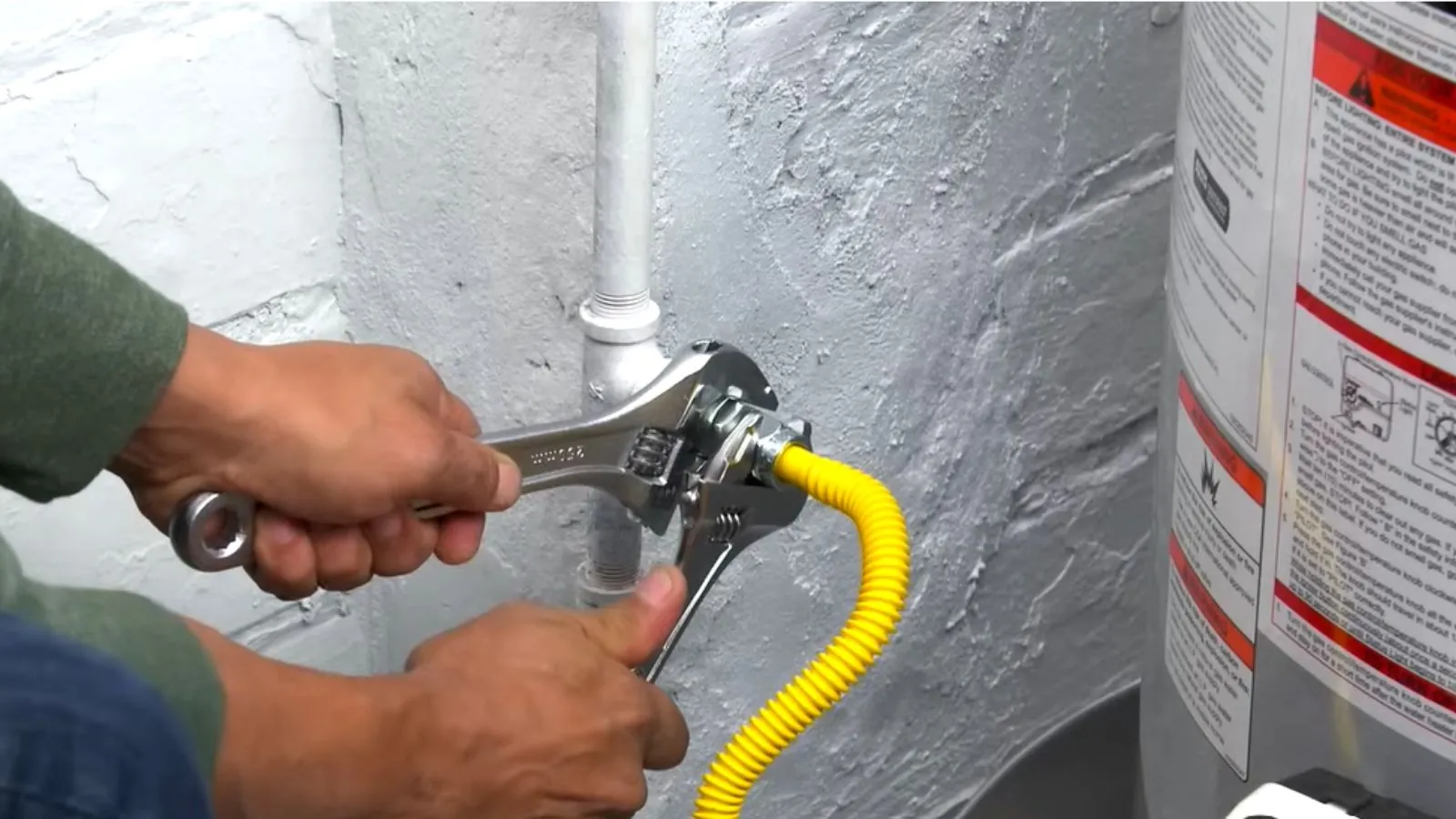
If you have no hot water or see a leak, start with two quick checks. Look for water around the base of the tank, and look at your breaker panel or the gas control on the heater. Then call (855) 575-2890, where a person answers 24 hours a day, so a failure at midnight or on a Sunday gets the same attention as one at noon.
Leaks near electrical parts, a gas smell, or a tank that is rumbling and very hot are reasons to stop and step away. For gas smell, leave the building and call 911 or your gas utility first. For everything else, tell us what you see and we will explain what is safe to do while we come out. We offer same-day appointments when available.
Start here: what is your heater doing?
Symptoms point to different parts, and a good description saves time on the phone. The table below groups the most common complaints for gas and electric tanks.
| What you notice | Common cause | What we usually do |
|---|---|---|
| Lukewarm water, runs out fast | Failed lower element (electric) or sediment buildup | Test and replace the element, or flush the tank |
| No hot water at all, electric | Tripped breaker, bad upper element, failed thermostat | Test the circuit and parts, replace the failed one |
| No hot water, gas | Pilot out, bad thermocouple, or gas control issue | Relight if safe, replace the failing part |
| Burner flame is yellow or sooty | Poor combustion or blocked vent | Stop use, inspect, call the gas utility if you smell gas |
| Water around the base | Tank leak or leaking fitting | Locate the source, repair a fitting or advise replacement |
| Dripping from the relief valve pipe | High pressure, hot water expansion, or worn valve | Test the valve, check pressure, consider an expansion tank |
| Water is too hot | Thermostat set high or failed | Adjust or replace the thermostat |
Gas water heater repair
Gas heaters depend on a flame, a safe supply of gas, and a clear vent path, so repairs are about all three. A pilot that keeps going out is often a worn thermocouple or a dirty pilot assembly. The gas control valve can also fail, and that is a part replacement rather than a quick adjustment.
If your pilot went out once, you can follow the lighting instructions printed on the heater. If it will not stay lit, or if you ever smell gas, do not keep trying. Leave the house, call 911 or your gas utility, and call us once everyone is safe. A blocked vent or a back-drafting heater can also release carbon monoxide, so a working CO alarm near the heater is worth having.
Electric water heater repair
Electric tanks have two heating elements and two thermostats, and most no-heat calls come down to one of them. A tripped breaker is the easy case, and it is worth checking before you call. A repeat trip usually means a shorted element, which needs a replacement and not just a reset.
Lukewarm water that runs out quickly often points to the lower element, while no hot water at all often points to the upper element or thermostat. Water and electricity do not mix, so do not open the access panels yourself if there is any dampness around the tank. Shut off the breaker and let us handle the testing.
Hybrid and heat pump water heater repair
Hybrid heat pump heaters use a small compressor system plus backup electric elements, so they have more parts than a standard tank. Common issues include error codes, fan or airflow problems, a clogged condensate drain, and a unit that quietly switches to its backup elements and drives up the power bill. They also need open space around the unit to pull in air.
We work on hybrid units and will check the manufacturer's code list, the airflow, the condensate line, and the backup elements. Some failures inside the sealed heat pump system need the manufacturer or an authorized service agent, and we will tell you plainly if that is the case.
When a leak means the tank is done
Water heater leaks are the problem we hear about most. The cause is usually one of two things. If the water comes from a fitting, valve, or supply line, the leak can often be repaired. If it comes from the tank body, the inner shell has corroded through, and no patch will hold.
A leak that seems to come from under the tank may also be condensation or a nearby pipe, so a plumber checks before blaming the tank. If the unit is more than about 10 to 15 years old, which the US Department of Energy gives as typical for storage tanks, and the tank itself is the source, replacement is the sensible choice. See our water heater replacement page for how that works.
A heater failure that cannot wait until morning
Some heater failures are emergencies and should not wait for daylight. Call our night and weekend line if you have any of the following:
- Water running out of the tank or filling the drain pan
- A relief valve that is spraying or discharging steadily
- Scalding water at the taps even after you lower the setting
- Gas odor, soot around the heater, or a CO alarm sounding
- A heater in an attic or on an upper floor that is dripping onto ceilings below
If you have no hot water and no leak, it may be able to wait for a morning visit, but you do not have to guess. Call and we will help you decide, and we can book the next available appointment.
What to check before you call
A few quick checks are safe and sometimes solve the problem. Take only the steps that feel comfortable.
Quick checks for no hot water
- Check that the breaker for an electric heater has not tripped
- Look at the gas control to confirm it is set to on (gas heaters)
- Check whether the pilot light is lit, and follow the label if you relight it
- Confirm the water supply valve above the heater is fully open
- Note any error code or blinking light, and the brand and model on the label
- Write down when the problem started and whether anything changed beforehand
If any step shows water, gas odor, or damaged wiring, stop there and call. Do not remove covers on a wet electric heater.
Repair or replace: the honest comparison
We would rather fix a young heater than sell you a new one. Most failed elements, thermostats, thermocouples, and relief valves are modest repairs on a heater that is otherwise in good shape. A tank that is old, rusty, or leaking is usually better replaced.
Age matters because the US Department of Energy puts storage tank life at about 10 to 15 years. A repair on a 13-year-old tank can buy time, but the next failure may be the tank itself. We will tell you where your unit sits in that range and let you decide. If you are planning a new unit without an emergency, see water heater installation.
Maintenance that prevents repeat calls
Tanks collect sediment from the water, and that sediment bakes onto the bottom, reduces efficiency, and makes the tank noisy. An annual flush helps many heaters last longer. A plumber can also check the relief valve, the shutoff valve, and the condition of the anode rod.
The anode rod is a metal rod inside the tank that corrodes first so the tank steel lasts longer. If it is spent, the tank corrodes faster. Replacing a worn rod early can add life to a tank that is otherwise healthy, though it will not save a tank that has already started leaking.
What affects the price of a heater repair
We give you a clear price before work starts. The final figure depends on what we find, and these are the factors involved.
What affects the cost of water heater repair
- The failed partA thermostat or element costs less than a gas control valve or a heat pump component.
- Heater typeGas, electric, and hybrid units have different parts and different labor.
- AccessA heater in an attic or tight closet takes longer to reach and work on.
- After-hours timingNight, weekend, and holiday visits are priced differently from daytime appointments.
- Related issuesA corroded valve, supply line, or drain pan may need replacing at the same time.
If a heater leak damaged your floors or walls, your homeowners policy might cover the water damage even if it does not cover the heater. Ask your insurer, and photograph the damage before cleanup.
Want your real number? Call (855) 575-2890Heaters in Helena homes
Helena has grown fast since 1990, when about 3,918 people lived here, to 20,914 at the 2020 census. A lot of houses were built in the 2000s and 2010s, and heaters installed then are now reaching the age where repairs start to stack up. Elements, thermostats, and relief valves tend to be the first to go, and tanks follow.
If your home is in a larger subdivision like Dearing Downs or Riverwoods, a neighbor's heater failing is a hint that yours may be next, since builders often installed units in the same batches. Old Town Helena homes can have older tanks and older supply lines, so we look at the connections as well as the heater.
Hardness of the water affects how fast sediment builds up. We do not know the exact figure for your address, so ask the City of Helena Utilities Board at (205) 663-1670 or test a tap sample.
Related help and service areas
If your heater is leaking and you cannot tell whether the water is from the tank or the pipes, our leak detection service can trace the source. If a shutoff valve or supply line is the problem, our faucet repair team can also look at fixtures that run hot or cold.
We serve Helena and surrounding towns, including Calera and Chelsea. The same 24/7 line covers all of them.
Water heater repair questions
Yes. Our emergency line answers every day of the year, including nights, weekends, and holidays. We offer same-day appointments when available, and we will tell you what to shut off while you wait.
A worn thermocouple, a dirty pilot assembly, a draft, or a failing gas control valve are the usual causes. If the pilot will not stay lit after a normal relight, stop and call. If you ever smell gas, leave the house and call 911 or your gas utility first.
The usual causes are a tripped breaker, a failed heating element, or a bad thermostat. Check the breaker first. If it trips again or the water stays cold, shut it off and call us, because a shorted element needs replacing.
Yes, for common problems like error codes, airflow, condensate drain clogs, and backup elements. Some sealed-system faults need the manufacturer's service network, and we will say so if that is the case.
Often yes, if the tank itself is sound. Replacing the rod can slow corrosion in a healthy tank. It does not fix a tank that is already leaking.
It depends on the source. A leak at a fitting, valve, or supply line is often repairable. A leak from the tank body means the shell has corroded and the tank needs to be replaced.
Age and cost decide it. The US Department of Energy puts storage tank life at about 10 to 15 years, so repairs on a unit near the end of that range may not be worth the money. We will give you a clear price before work starts and an honest opinion.