
If a drain line is backed up right now, stop running water in the house and call (855) 575-2890. We answer 24/7, and a backup at midnight is handled the same way as one at noon. Tell us which fixtures are affected, and we will tell you whether a cable, a jet, or a camera visit makes the most sense.
Hydro jetting is not always the first tool we reach for. It is the right one when a line is coated with grease, packed with roots, or lined with scale that a cable keeps leaving behind.
What hydro jetting actually does
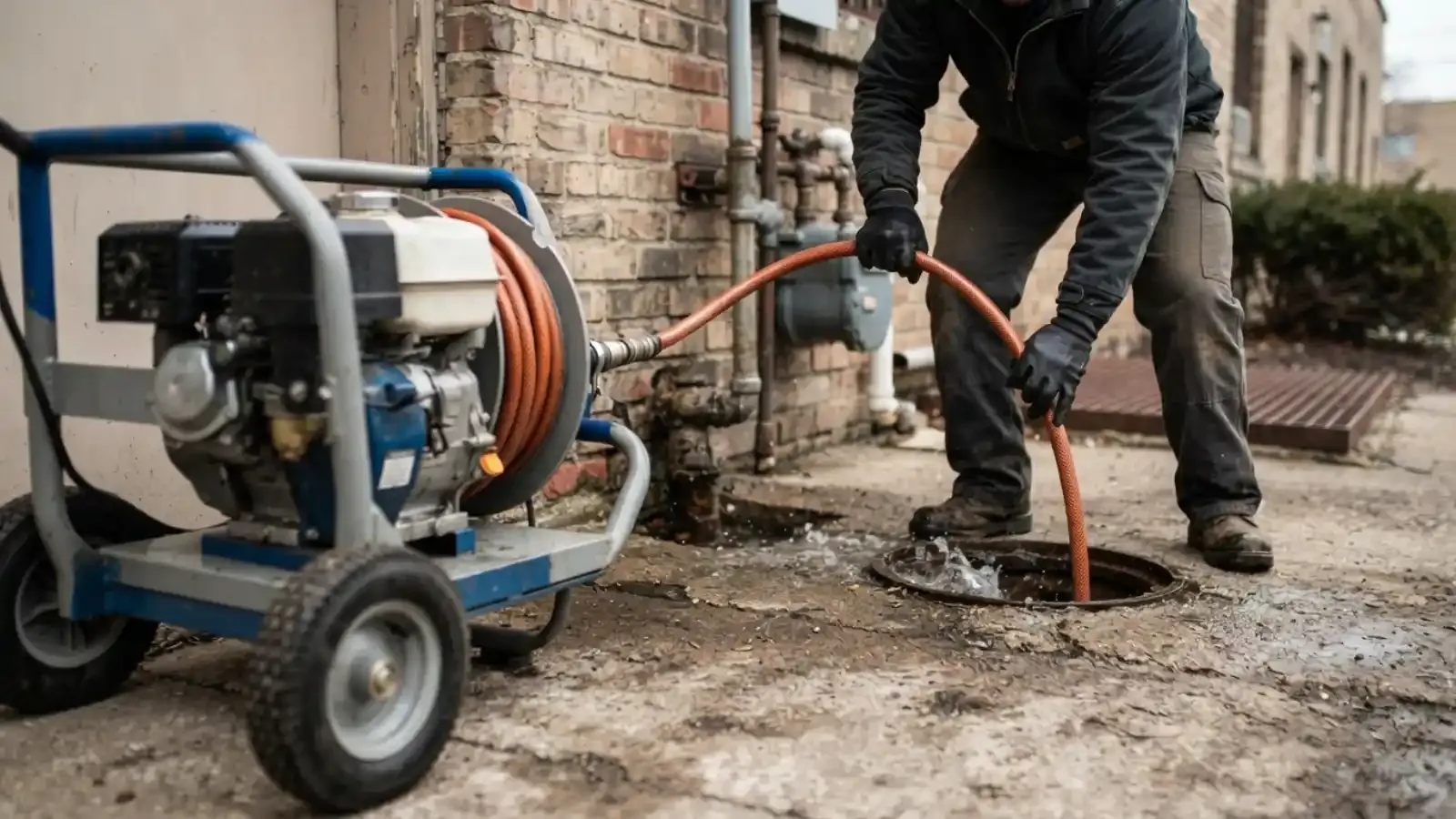
A jetting machine sends water through a hose and nozzle at very high pressure. The water spray scrubs the inside of the pipe in all directions and flushes the debris out through the line. A cable, by contrast, punches a hole through the blockage and leaves the rest of the buildup clinging to the walls.
That difference is why jetting is often the fix for lines that clear for a few weeks and then clog again. The pipe is cleaned along its full length, not only where the stoppage sat.
Signs a line needs jetting instead of a cable
- The same drain has been cabled more than once and slows down again
- Kitchen drains that clog from grease buildup
- Roots are visible on a camera or have been pulled out on a cable
- Several fixtures drain slowly at once, not just one
- Floor drains or the main line back up after heavy use, such as laundry day or a houseful of guests
If you are not sure which of these fits, ask about a camera inspection first. A short look inside the pipe takes the guesswork out of the choice.
When a backup cannot wait until morning
A sewage backup into a tub, basement or floor drain is an emergency in any home. The longer wastewater sits, the more it soaks into flooring and drywall, and the harder the cleanup becomes.
For weekend and after-hours calls, we start by asking what is backing up, how fast, and whether the problem is in one fixture or the whole house. If the line needs jetting, we explain that before work begins. If a cable can clear it at lower cost, we tell you that instead.
| Question | Drain cable | Hydro jetting |
|---|---|---|
| How it works | Pushes through the blockage with a spinning cable | Scours pipe walls with pressurized water |
| Best for | Hair, paper, simple clogs | Grease, scale, roots, repeat clogs |
| Leaves residue on pipe walls | Often | Rarely |
| Needs a cleanout or access point | Yes | Yes |
| Works on every pipe | Most pipes | Not always, depends on pipe condition |
When jetting is not the right choice
Jetting is powerful, and powerful tools are not right for every pipe. A line that is cracked, collapsed or badly separated can be damaged further by high pressure. A camera look before jetting tells the plumber whether the pipe can take it.
If the camera shows a broken or sagging section, jetting would only move the problem. In that case the fix is repair rather than cleaning. Our sewer line repair page covers repair and replacement options when a line is beyond cleaning.
Jetting for restaurants and commercial kitchens
Grease is the main enemy of commercial drains. Kitchen lines in restaurants collect fat that hardens and narrows the pipe, and a cable alone can leave much of it in place. Regular jetting is one way food businesses keep lines flowing between grease trap pumpings.
If you run a business in Helena, our commercial plumbing page covers after-hours service, since a kitchen that cannot drain cannot open.
Jetting for tree roots
Small roots find their way into joints where water and nutrients leak out. Once inside, they grow into thick mats that catch everything flowing past. Cutting heads on a jetting nozzle can chop root growth and flush it out, though roots can grow back if the joint stays open.
If roots keep returning, the long-term answer may be repairing the joint or section of pipe. Jetting then becomes maintenance rather than the whole fix. Mature trees near a sewer lateral are worth noting when you call.
What happens during a jetting visit
- We talk through the symptoms and decide if jetting fits
- The plumber finds an access point, usually a cleanout
- A camera look checks that the pipe can take the pressure, when needed
- The jet nozzle runs through the line and scours the walls
- We flush debris out and confirm water flows freely
- We explain what we found and whether the problem is likely to return
Helena homes and jetting
Helena has grown fast since 1990, and most homes here are newer than that. Newer homes are not immune to clogs, since grease, wipes, and roots near laterals cause backups in any age of house. In Old Town Helena, where homes are older, drain lines have had more years to collect buildup.
Buck Creek and the Cahaba River run through the city, and many properties have mature landscaping near the line. If a drain slows every spring or after wet weather, tell us. Sewer service here comes from the City of Helena Utilities Board, and the utility can tell you where its responsibility ends and yours begins.
We also serve Alabaster and Pelham, so a nearby neighbor can use the same 24/7 number. For basic clogs that do not need jetting, our drain cleaning page explains the options.
What affects the cost of hydro jetting
- Length and size of the lineLonger or larger pipe takes more time
- Severity of buildupHeavy grease or roots take longer to clear
- AccessA clean access point makes the job faster than a line that must be opened up
- Camera workA look before and after adds a step but protects the pipe
- After-hours timingNight and weekend calls can carry different rates
You get a clear price before work starts. If a backup caused water damage, ask your insurance provider what your policy covers.
Want your real number? Call (855) 575-2890Hydro jetting questions in Helena
Yes. Our line is open 24/7. Call (855) 575-2890, and we will talk through whether jetting, a cable or a camera visit is the right next step.
It can be, if the pipe is in sound condition. A camera look beforehand shows whether the line can take the pressure. Cracked or collapsed pipe is better repaired than jetted.
A cable pokes a hole through the clog. A jet uses pressurized water to scrub the full pipe wall, which is why it works better on grease and scale.
It can clear them. If roots keep coming back, the joint they are entering probably needs repair.
An access point is needed. A cleanout is the easiest way in, but a plumber can sometimes use another point such as a vent or fixture opening.
It depends on the volume of grease and the layout of the line. Commercial kitchens often follow a regular schedule. Ask us during your visit.