
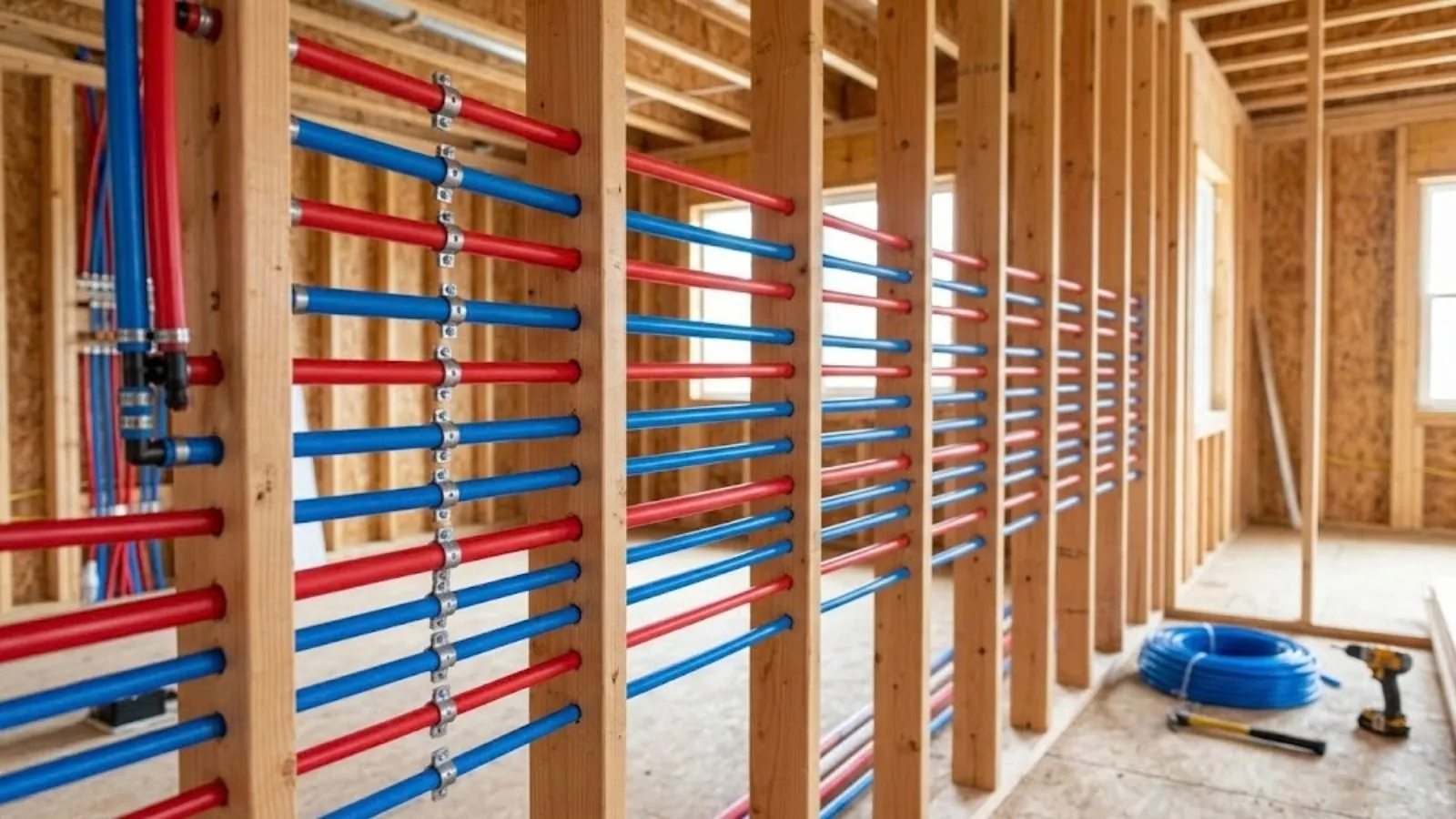
Repiping is a planned project, not a one-time fix. It makes sense when a house has had repeated leaks, discolored water, poor pressure or pipe that is simply at the end of its life. The goal is to replace what is failing before it floods a room, and to do it in a way you can schedule.
Who needs it, and who does not
One pinhole leak does not mean the whole house needs new pipe. A repair is usually the right answer when the surrounding line is sound. Repiping starts to make sense when failures keep coming, when the pipe material is known to age badly, or when a remodel opens walls and the pipe is in view anyway.
We look at the pipe before recommending anything. If we think spot repairs will work, we say so, and if you are better off replacing a run, we explain why. A second opinion is a reasonable thing to ask for on a job this size.
Signs it is time to look at new pipe
- Leaks that appear in different places within a short period.
- Brown, yellow or rusty water, especially after the water has been off.
- Pressure that drops at several fixtures, not just one.
- Pipes that look flaking, crusty or green at joints.
- Cracks in plastic pipe that has turned brittle with age.
- A pending remodel that will open the walls anyway.
If you find more than one of these, that is a strong reason to have the whole system inspected. A single problem is more often a repair.
Galvanized, CPVC, copper and PEX: what each tells us
The pipe in your walls shapes the conversation. Galvanized steel is the older gray pipe with threaded joints. It corrodes from the inside, narrowing until pressure falls, and eventually it leaks. Replacing galvanized lines is often driven by weak flow and rusty water.
CPVC is a cream or light yellow plastic pipe. It can become brittle with age and heat, and cracks often appear at fittings. If your home has CPVC and you have already had a crack, replacing it before more cracks form may be cheaper than waiting.
Copper lasts a long time but can develop pinholes from the inside, especially where the water is aggressive or flow is fast. PEX is flexible, usually red, blue or white, and is a common choice for replacement lines because it routes easily through walls. It has its own fittings and limits, and we will explain which fit your layout.
| Existing pipe | Common trouble | Usual direction |
|---|---|---|
| Galvanized steel | Rust, low flow, brown water | Replace the affected runs or the whole system |
| CPVC | Cracking at fittings, brittleness | Replace sections or the whole system if cracks repeat |
| Copper | Pinholes, corrosion at joints | Repair if isolated, repipe if widespread |
| PEX | Fitting failures, damage from sunlight | Replace fittings or sections |
| Older mixed systems | Different metals meeting | Replace the mismatched sections |
Whole house or partial?
A whole-house repipe replaces all supply lines from the main valve to every fixture. A partial repipe replaces one run, such as the hot lines, the kitchen or one bathroom. Partial work can be the right call when the rest of the system is sound, and it is less disruptive.
Whole-house repiping makes more sense when failures are scattered, the pipe is the same age and material everywhere, or you plan a remodel anyway. It is also easier to plan when walls are going to be opened, since the project and the repairs overlap.
We will walk the house with you, check the materials, test pressure, and describe both options in plain terms. If a partial repipe is likely to leave a weak link next to the new pipe, we will tell you.
How the work goes
A repipe is a project, and it helps to know the order. Here is a typical sequence:
What a repipe usually involves
- We inspect the system, identify the pipe type and decide on a scope with you.
- We confirm what needs permits and inspections by checking with the Helena building department.
- We schedule the water shutoff and tell you how long the water will be off each day.
- New lines are run through walls, attics and crawlspaces, with access holes kept as small as practical.
- The new system is pressure tested before anything is closed up.
- Fixtures are reconnected, and the access holes are left ready for drywall repair.
Patch and paint is usually a separate trade, which is something we tell you before we start. If you have a remodel scheduled, coordinating with that crew can save time. Occupied homes can stay occupied in many cases, but you may be without water during working hours.
Repiping and the drain side
Repiping usually means supply lines, the pipes that carry water in. Drain lines are a different system. If you are also having backups or slow drains, say so, since a camera inspection of the drains can sometimes point to a separate project. Our sewer line repair page covers buried drain failures.
If a leak turns out to be in the slab or buried line, the pipe may need a reroute instead of a replacement. For that, see leak detection, which covers how a slab leak is found and what the options are.
Why this matters in Helena
Helena's population went from 3,918 in 1990 to 20,914 in 2020, so most homes outside Old Town are newer than 1990. Newer homes commonly have newer plumbing, so a full repipe tends to come up less often than it would in an older city. When it does come up, it is often because of one repeated failure, a remodel, or a pipe type that has not aged well.
Old Town is where older plumbing is more likely, and a repipe there can pair naturally with other updates. If you are buying a home and want to know what pipe it has, a plumber's inspection before closing is a sensible step.
With a median owner-occupied home value of $330,700 in Helena, a failed pipe inside a finished house can do real damage to flooring and drywall, which is why replacing worn pipe on your schedule beats doing it after a flood.
What affects the cost of repiping
- Size of the houseMore fixtures and more pipe run means more material and more labor.
- Whole house or partialA single run costs far less than a full system, but may leave older pipe behind.
- AccessOpen attics and crawlspaces are quick, while finished walls and second floors take longer.
- Pipe material chosenThe material and fittings used affect both parts and the way the pipe is installed.
- Wall and ceiling repairCutting access is part of the job, but patching and painting are usually separate.
Insurance seldom pays for planned repiping, though it may cover water damage from a sudden failure. If a leak has already caused damage, ask your insurer what they need from us. We will provide a clear price before work starts.
Want your real number? Call (855) 575-2890Before the repiping project
- Pick a window when you can handle limited water.
- Clear access to the main valve, water heater, and under-sink areas.
- Move furniture and valuables from walls where pipe will be run.
- Plan for pets and children to be elsewhere during working hours.
- Ask your insurer whether any pending claim affects the scope.
- If you plan a remodel, share the plan so the work is sequenced together.
Where to start
If you are unsure whether you need a repipe, the first step is an inspection and a conversation. Most repiping starts as a leak call, and the plumber's job is to separate the leak that needs a repair from the leak that signals a pattern. We offer same-day appointments when available.
We work in Pelham and Alabaster too, so if you live nearby, give us a call. If you need to know about water heater lines before the work starts, see water heater replacement.
Repiping questions from Helena homeowners
Repeated leaks in different spots, rusty water and falling pressure are the strongest signs. One isolated leak usually calls for a repair instead.
Yes. Galvanized lines corrode from the inside, so replacing them is a common reason for a repipe. We inspect the pipe first to see how much of it needs to go.
CPVC can turn brittle with age and crack at fittings. If it has cracked once, we look at whether replacing it will cost less than repeated repairs.
The shutoff is usually planned around each working day, and we tell you how long it will be before we begin. The length depends on the size of the house and the access.
Often, yes, though water is off during working hours. We discuss the schedule with you before the job.
Check with the Helena building department. Permit rules vary by scope, and we confirm what is needed before work begins.