
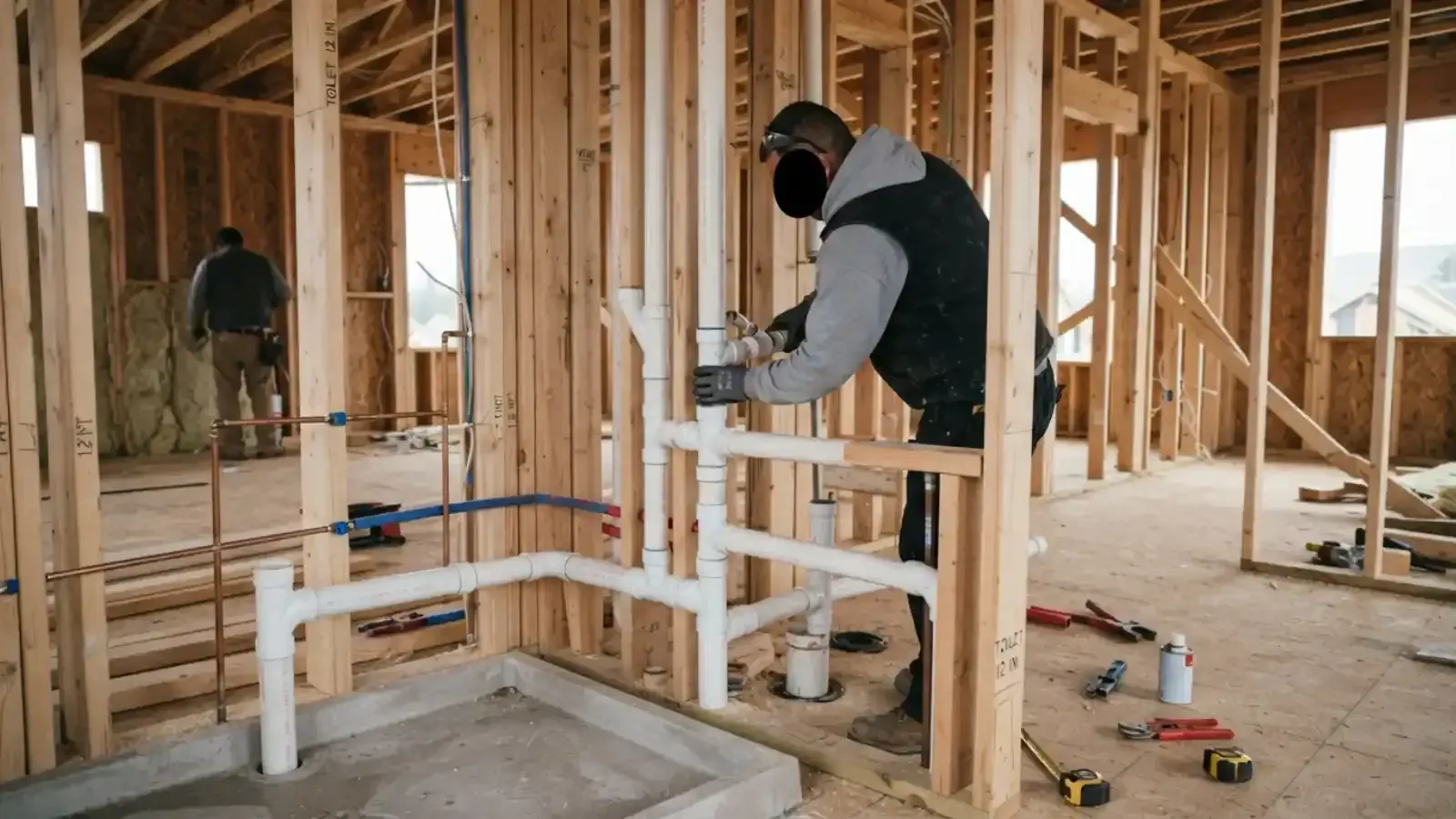
Installing plumbing for a tub means running a drain with a trap, connecting hot and cold supply lines to a valve, and building an overflow, all before the tub is set and the walls are closed. The work happens in stages, and the order matters because most of it ends up hidden behind a finished surface. A mistake in the drain or valve is expensive to reach later.
This post walks through the stages in plain terms. It describes what the work involves and why a licensed plumber usually does it. For rules in your area, ask the Helena building department.
The big picture in four stages
Tub plumbing follows a predictable sequence. First comes planning and layout, then rough-in, then testing, and finally setting the tub and finishing the connections. Each stage ends with a check before the next begins.
Knowing the order helps you schedule other trades. Framing, plumbing, electrical, drywall, and tile all depend on the plumbing being right the first time.
Stage one: layout and planning
Layout decisions before any pipe is cut
- Choose the tub type, since freestanding, alcove, and drop-in styles all need different drain and valve locations.
- Get the manufacturer's specification sheet for the exact drain position.
- Mark the drain and valve centerlines on the floor and wall framing.
- Check floor joists and the subfloor for the path of the drain.
- Decide where the access panel will go if the tub has a hidden trap or valve.
Model codes such as the International Plumbing Code (IPC) and the Uniform Plumbing Code (UPC) are published for towns and counties to adopt, often with local changes. Which rules apply at your address depends on what the local building department has adopted, so ask them before work starts.
The spec sheet is the most overlooked item. Drain location varies between brands, and moving a drain after the floor is closed can mean cutting out finished work.
Stage two: the rough-in
Rough-in is the pipe work installed before the walls and floor are closed. For a tub, it includes the drain line, the trap, the vent connection, and the supply lines that run to the valve body.
A drain needs to slope toward the main line so water leaves the tub, and a trap holds water to block sewer gas. The vent lets air in behind the water so the tub empties without gurgling. Each of these has to be sized and placed so the tub drains quickly and quietly.
Parts and what each one does
| Part | What it does | What can go wrong |
|---|---|---|
| Drain and overflow | Carries water out and prevents spills | Leaks at the connections |
| P-trap | Holds water to block sewer gas | Dry or poorly sloped trap |
| Vent | Lets air in so the drain flows | Blocked or missing vent causes gurgling |
| Valve body | Mixes hot and cold water | Wrong depth in the wall |
| Supply lines | Bring hot and cold water to the valve | Leaks behind the wall |
| Access panel | Lets you reach hidden parts | Missing, so repairs mean cutting walls |
Stage three: test before closing the walls
Before anyone covers the pipes, the plumber tests them. Drain lines are filled with water or put under test pressure to look for leaks. Supply lines are pressurized with water or air and watched for a drop.
Tests like this are common in inspections. In some places a plumber must be present for inspection stages. Ask the Helena building department what it requires for a tub install in your address, since we cannot state those rules for you.
Stage four: setting the tub and finishing
Once the rough-in passes, the tub is set, often into a bed of mortar or on a manufacturer supported base so it does not flex. Then the drain and overflow are connected, the valve trim is installed, and the surround or tile goes up.
This is also when the final leak check is done. Run water, fill the tub, and let it drain while someone watches the trap and every joint.
Why hire a plumber for this
A tub drain that leaks inside a wall or floor can run for weeks before showing up as a stain or soft spot. By then the subfloor, insulation, and ceiling below can be wet. The cost of fixing hidden water damage is far higher than the cost of installing the drain right.
If you hire someone, you can check a plumber's license through the Alabama Plumbers and Gas Fitters Examining Board's public lookup. A clear written scope and price before work starts protects both sides.
Pricing factors
What shapes the price of tub plumbing
- Tub typeFreestanding tubs need floor-mounted supply and a drain that lines up exactly. Alcove tubs are simpler.
- Floor and framingConcrete slabs need cutting. Wood floors need joist checks and sometimes notching or blocking.
- Distance to main drainA short run to an existing drain costs less than a long new one.
- Valve and trimPressure-balanced and thermostatic valves cost more than basic ones.
- AccessA bathroom on a second floor or over a finished ceiling takes more labor.
Insurance usually pays for sudden water damage, not for new fixture installation. Ask your agent whether work on a drain affects your coverage.
Want your real number? Call (855) 575-2890Checklist before work begins
Get ready for the plumber
- Have the tub and its specification sheet on site before rough-in.
- Clear the bathroom and the area under it if there is a crawlspace or basement.
- Find your main water shutoff so it can be closed if needed.
- Confirm with the building department what inspection is required.
- Decide on valve and trim, since the valve body goes in during rough-in.
- Plan where an access panel will go.
Safety checklist before a tub project starts
- Shut off the water supply and open a faucet to relieve pressure
- Switch off power to anything near the work area
- Confirm the floor and subfloor are dry and solid before cutting
- Call a plumber before opening walls near gas or electrical lines
Adding a tub in a Helena home
Helena's growth since 1990 means many homes have bathrooms built with standard layouts. Adding a tub in a former closet or converting a shower is possible, but the drain and vent paths must support it. For a new fixture, our plumbing installation page describes what we handle, and a pipe replacement project may come up if the existing supply lines are undersized.
We serve Helena and nearby areas such as Pelham and Alabaster. A site visit lets us see joists, drain location, and access before giving a price.
Tub plumbing questions in Helena
We cannot state local rules. Ask the Helena building department whether your project needs a permit or inspection.
Sometimes. The drain position, size, and condition all have to fit the new tub, and an old trap or pipe may need replacing.
It is the pipe work installed before walls and floors are closed. It includes the drain, trap, vent, and supply lines.
It depends on access, the floor type, and how much changes. A plumber can estimate after seeing the space.
Call (855) 575-2890. We look at the space and give a clear price before work starts.