
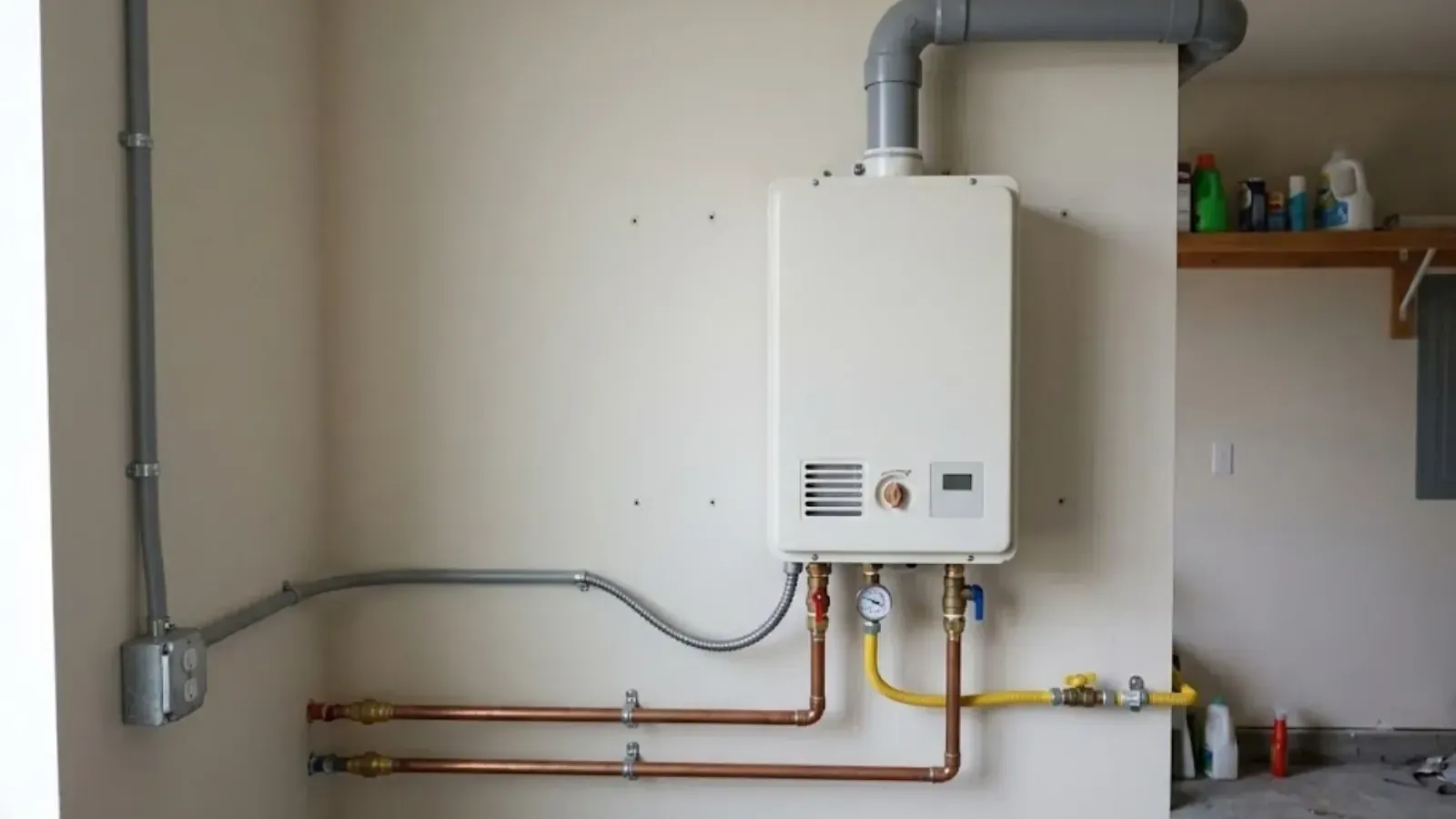
The cost of installing a tankless water heater in Helena comes down to five things. These are the unit itself, the fuel or power it draws, how it vents, what has to change in your existing pipes, and the labor to tie it all together. A tankless unit is rarely a swap for a tank. It is a different kind of appliance, and the house often has to be adjusted to fit it.
That is why two neighbors on the same street can get very different quotes for the same brand. The number follows the work, and the work follows the house.
What you are actually paying for
A tankless heater heats water only when a tap opens. Because it has no tank, it sits on a wall and needs a steady supply of fuel or power to heat a fast-moving stream of water.
The unit is only part of the bill. Venting, gas line sizing, electrical capacity, and plumbing changes are all separate line items, and any of them can be the biggest one.
If you want the full picture of how these units work in a home, our tankless water heater service page covers the equipment and what a visit includes.
The cost factors, one at a time
What changes a tankless installation price
- Gas or electricGas units usually need a larger gas line and a vent. Electric units need heavy electrical capacity, often a dedicated breaker and thicker wiring.
- VentingGas units exhaust hot gases and need an approved vent path to the outside. A long or complicated run costs more than a short, direct one.
- Size and flow ratingA unit sized for a whole house with several showers costs more than one sized for a small home. Bigger flow means bigger supply lines.
- Existing pipe conditionOld fittings, undersized water lines, or missing shutoff valves get corrected during the install.
- Removal and disposalTaking out the old tank, draining it, and hauling it away is part of the job.
Standard homeowners policies typically cover sudden damage, not wear, age, or an appliance that has simply run out its life. Check your policy before assuming a replacement is covered.
Want your real number? Call (855) 575-2890Gas versus electric, and why it matters
A gas tankless unit pulls a lot of fuel in a short time. If the gas line that fed your old tank is small, it may need to be upsized, which means opening walls or crawlspaces and adding labor.
An electric unit has no vent, which saves time and money on that side. But it can demand more electrical capacity than an older panel has to spare, and a panel upgrade belongs on the cost list when that happens.
Neither fuel is automatically cheaper to install. The right choice depends on what is already in your house and what it would take to bring the other one in.
How the choices compare
| Decision point | What it affects | What to ask about |
|---|---|---|
| Fuel type | Supply line, vent, electrical work | Does my current line or panel have room? |
| Vent route | Labor and materials | Can the vent go straight out, or does it need a long run? |
| Unit size | Equipment cost and supply sizing | How many fixtures run at the same time? |
| Water line size | Flow and performance | Do any lines need to be upsized? |
| Old tank removal | Labor and disposal | Is it included in the price? |
| Water quality | Maintenance later | Should I plan on flushing the unit? |
Efficiency and lifespan, from the Department of Energy
According to the US Department of Energy, tankless water heaters are about 8 percent to 34 percent more efficient than storage tank models, depending on how much hot water a household uses. Homes that use less hot water see the smaller gain, and homes that use a lot see the larger one.
The same agency puts the typical life of a tankless unit at about 20 years, compared with 10 to 15 years for a storage tank. Those two facts are the main reason people accept a higher up-front cost: the unit can last longer and use less energy over that time.
Those figures are averages. Your actual savings depend on your hot water habits, your fuel, and how well the unit is maintained.
Is tankless worth it for a Helena home?
Helena grew fast. The population went from 3,918 in 1990 to 20,914 in 2020, so most houses outside Old Town are fairly new. Many of those homes have tank heaters that are now aging out, which makes this a common time to decide between replacing like for like and changing the system.
If your tank is near the end of its life, compare a standard water heater replacement with a tankless conversion before you commit. If the tank is fine and you only want lower bills, the payback can be slow, and waiting is a legitimate choice.
Questions to ask any plumber before you accept a quote
Before you sign off on a tankless quote
- Is the venting included, and what material and route are you planning?
- Does my gas line or electrical panel need to be upgraded?
- Is the old tank removal and disposal included?
- What flow rate is this unit rated for, and does it match my fixtures?
- What maintenance does the manufacturer require, and how often?
- Is the plumber licensed? You can check on the state board lookup.
- Will I get the final price in writing before work begins?
Maintenance affects the long-term cost
A tankless unit with hard or mineral-heavy water can build scale inside the heat exchanger. That scale lowers performance and can shorten the unit's life if it is ignored. Many manufacturers call for periodic flushing, and the schedule is in the installation manual.
We do not quote a Helena water hardness number because we do not have a verified one. Ask the utility, or test your tap with a simple kit, and then plan flushing based on what you find.
Where we install tankless units
We install in Helena and the surrounding towns. If you live nearby, Pelham and Chelsea are on our service map, and the same cost factors apply there. A visit to look at your current setup is the only reliable way to put a real number on your install.
Tankless installation questions from Helena homeowners
Often yes, but the unit mounts on a wall and needs its own vent path or electrical supply. The old spot may need changes before the new unit fits.
A tank swap reuses the same fuel line, vent, and connections. A tankless install usually changes the vent, may upsize the gas line or add electrical capacity, and adds a few plumbing fittings.
Most models need electricity to run controls and fans, even gas units. A power outage can stop hot water until power returns, so ask about the model you are considering.
Usually not. Standard policies cover sudden damage such as a burst pipe, not the cost of replacing an old unit that has simply worn out.
A plumber has to see the current heater, the vent path, and the fuel and electrical supply. Call (855) 575-2890 and we will give a clear price before work starts.