
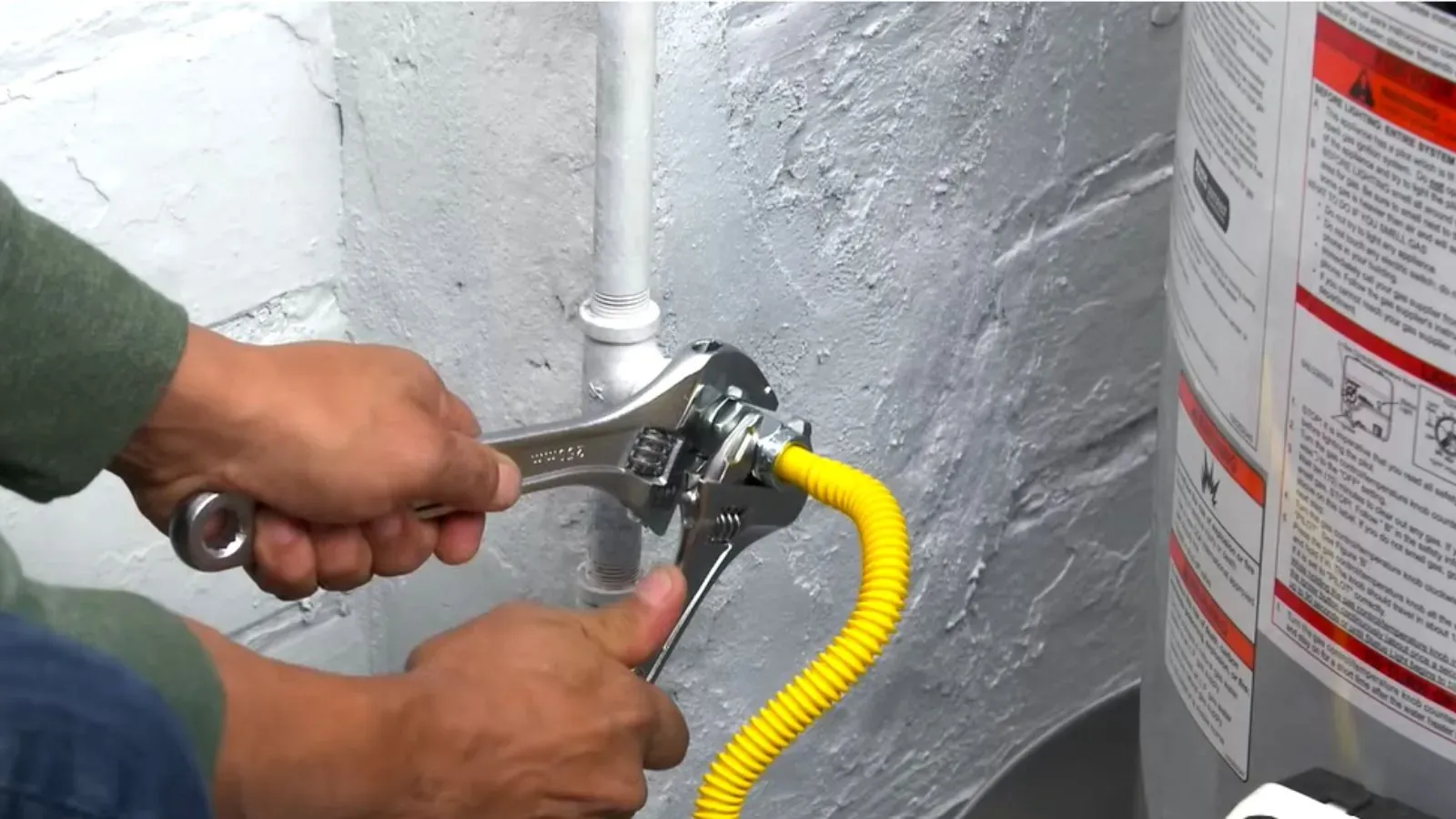
An anode rod is a metal rod inside a storage tank water heater. It corrodes on purpose so the steel tank does not. Once the rod is used up, the tank itself becomes the target, and a tank that starts to rust through cannot be repaired.
How often should you replace it? There is no fixed number. One major manufacturer says to inspect the rod once a year and replace it when it shows deterioration or has several inches of bare core wire showing. How long a rod lasts depends on the water chemistry, how much hot water you use and whether a water softener is installed. So the honest answer is to check on a schedule and replace on condition.
What the rod does inside the tank
Storage tanks are steel with a glass lining, and the lining is never perfect. Tiny gaps let water touch bare steel. The anode rod is made of a more reactive metal, so minerals and salts in the water attack the rod instead of the tank wall.
That is why a rod is called sacrificial. It is designed to waste away. When it is mostly gone, the protection stops, and corrosion shifts to the tank. This is one of the main reasons a tank fails before it should.
How often to inspect it
The manufacturer guidance we found points to a yearly inspection. Replacement is not tied to a calendar. A rod in one house may need attention in a few years, while a rod in another lasts much longer, depending on the water and the way the heater is used.
For that reason, your own heater's manual is the best source. It lists the correct rod, where it sits and how the maker wants it checked. If you cannot find the manual, the model number on the data plate lets you look it up. Follow the manual over any general rule of thumb you read online, including this one.
| What you see | What it means | Next step |
|---|---|---|
| Smooth rod, close to its original thickness | Plenty of protection left | Recheck at the next yearly inspection |
| Thin, pitted or flaking rod | Wearing down | Plan a replacement soon |
| Bare core wire showing for several inches | Mostly used up | Replace the rod now |
| Rod missing or crumbled to pieces | No protection for the tank | Replace the rod and inspect the tank |
| Heavy rust flakes in the water or a leak at the tank | Corrosion may have reached the tank | Call a plumber about replacing the heater |
What affects how fast a rod wears
Several things speed up the process, and some of them are in your control.
- Water chemistry: some water is harder on rods than other water, and the utility or a tap test can tell you more
- Water softeners: the manufacturer notes that a softener affects rod life
- Hot water use: heavier use moves more water through the tank
- Rod type: different metals suit different water, and the manual lists which fits your model
If you do not know your water chemistry, ask the City of Helena Utilities Board or buy a simple test kit. We do not guess at it, and neither should anyone selling you a rod.
Can you do it yourself?
Some homeowners do change their own rods, and it can be done safely with the right tools. It still has real pitfalls. The rod is often held in by a very tight fitting, and the work needs a long wrench or an impact tool. The tank must be shut off from power or gas, and the water supply closed, before the fitting is touched.
Hot water at the top of the tank is also a burn risk. If the fitting will not turn, if headroom above the heater is tight, or if you are not comfortable working near gas or a 240-volt element, stop and call a licensed plumber. Forcing it can crack the tank, and a cracked tank is a replacement.
Before you inspect or replace a rod
- Turn off the electric breaker or set the gas control to off, as your manual directs.
- Close the cold water supply valve to the heater.
- Open a hot tap in the house to relieve pressure, then drain a few gallons from the tank drain.
- Locate the rod fitting on top of the tank. Check the manual for its exact position and size.
- Loosen the fitting slowly. If it will not move, stop and call a plumber.
- Pull the rod and compare it to the table above.
- Install the correct replacement rod with the fitting sealed as the manual describes.
- Refill the tank fully before turning power or gas back on.
When a new rod is not worth it
A rod can only protect a tank that is still sound. According to the US Department of Energy, storage tank water heaters last about 10 to 15 years. If your heater is near the end of that range, or if the tank already leaks, swapping the rod will not buy you much.
At that point, water heater replacement is usually the better decision. If the unit is younger and the problem is something else, such as no hot water or a failing element, water heater repair may be the right call instead. A plumber can tell the two cases apart by looking at the tank, the age on the data plate and the condition of the rod.
Helena homes and water heater age
Helena grew from 3,918 people in 1990 to 20,914 in 2020, so a large share of homes outside Old Town were built in the last few decades. Their original water heaters are now old enough to be at or past the common lifespan range.
A yearly rod check is cheap insurance on a heater that is still sound. On a heater that was installed with the house, it is also a good moment to check the age on the data plate and make a plan.
If you are weighing a heater that is nearing its limit, you can also ask your plumber whether a tankless model, or a heat pump model, fits the home. Both have their own maintenance needs, and the manual is again the guide.
Where we work
We handle water heaters across Helena and the neighboring towns. If you live in Pelham, AL or Calera, AL, the same yearly check applies there. Call (855) 575-2890 if you want a plumber to look at the rod, the tank and the age of your unit in one visit, with a clear price before work starts.
Anode rod questions from Helena homeowners
There is no fixed interval. The manufacturer guidance we found says to inspect the rod yearly and replace it when it is worn. Water chemistry and softener use change how fast it wears, so follow your heater's manual.
It can affect rod life, and the manufacturer lists softeners as one factor. If you have a softener in your Helena home, check the rod more closely than you otherwise would.
We do not state a hardness figure for Helena. Ask the City of Helena Utilities Board for its water information or test your tap, then tell your plumber what you learn.
Only if the tank is still sound. Storage tanks last about 10 to 15 years, so a rod on a heater near that age may not extend its life much. A plumber can check the tank first.
You can, but a yearly look is what the manufacturer recommends. A rod you have never checked may already be down to bare wire.